How satellite tracking works on your wrist
Your watch doesn't "see" you on a map. It listens to timing signals from satellite constellations, including the American GPS, Europe's Galileo, Russia's GLONASS and China's BeiDou, and calculates where you are from tiny differences in arrival time. Every second or so it drops a point, and the line between points becomes your route and your distance.
The trouble starts when signals bounce. Glass office blocks, deep valleys and dense tree cover reflect signals before they reach your wrist, which makes the watch think you are a few metres off to one side. Join enough of those mistakes together and your 5K becomes 5.2K. Dual-frequency receivers listen on two bands, L1 and L5, and the newer L5 signal is easier to tell apart from its reflections. That's the single biggest reason our city testers preferred the four watches that have it.
Getting cleaner splits, whatever you wear
- Wait for the lock. Stand still outside for up to a minute before pressing start. Starting early is the most common cause of a wobbly first kilometre.
- Use the right satellite setting. "All systems + multi-band" for cities and forests; a simpler mode on open roads saves battery.
- Trust the lap, not the instant. Instant pace jumps around. Lap pace and average pace over a kilometre are far steadier for judging effort.
- Use track mode on the track. Garmin, Coros and Apple all offer a track run mode that snaps your line to lane one.
How the optical heart rate sensor reads you
The little green lights on the back of your watch shine into your skin. Blood absorbs green light, so as each heartbeat pushes blood through your wrist, the amount of light bouncing back changes. The watch counts those pulses. It's clever, but it is easily confused by movement, cold skin, tattoos in the sensor area, and a strap that's too loose.
For steady efforts, such as an easy run, a long walk or a gentle ride, all five watches tracked within a few beats per minute of our chest strap most of the time. The cracks show in fast changes: a 200 m sprint, the first minute of a hill rep, or the jump in heart rate when you rack a heavy squat. Wrist sensors often take several seconds to catch up, and occasionally lock onto your cadence instead of your heartbeat.
Our heart rate checklist
- Wear the watch a finger's width above your wrist bone, snug enough that it doesn't slide.
- Tighten the strap one notch for the workout, then loosen it after.
- Warm up for ten minutes in cold weather before trusting the number.
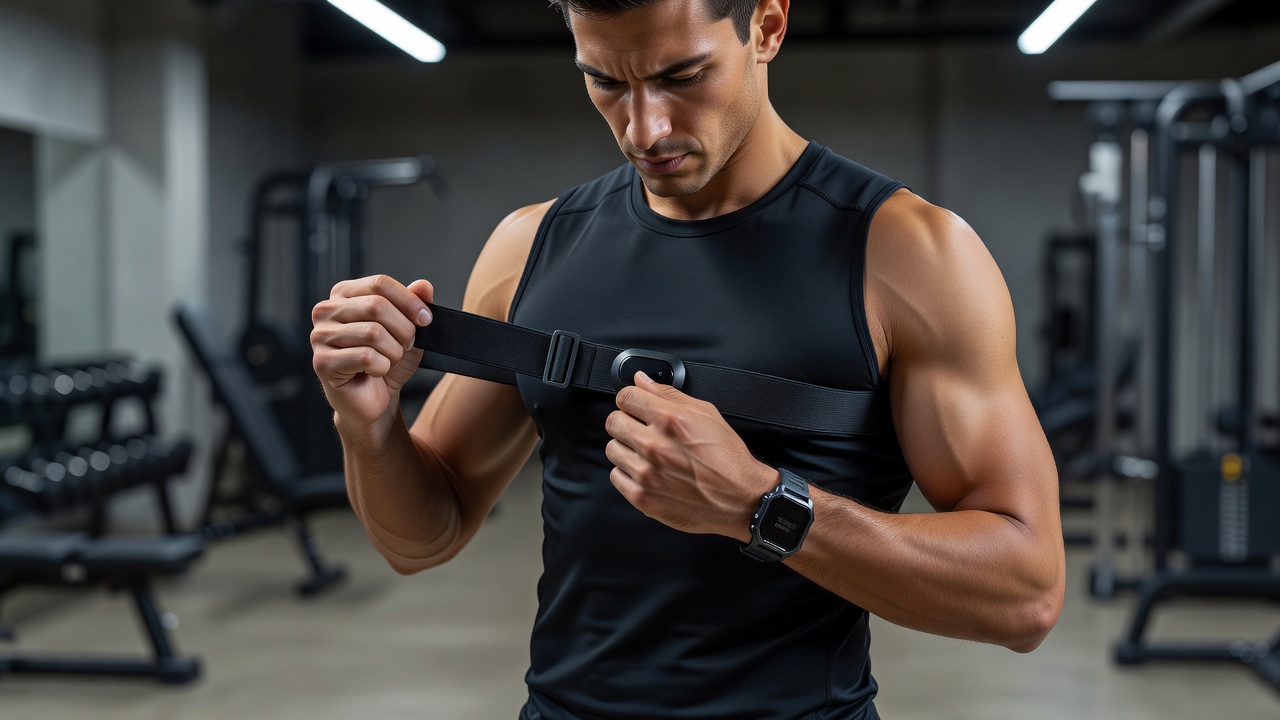
- For intervals, cycling and lifting, pair a chest strap such as the Polar H10 or Garmin HRM-Pro over Bluetooth or ANT+.
What to do with the numbers
Once you trust your heart rate, you can train by zones. A simple starting point is the Karvonen method, which uses both your resting and maximum heart rate. Pair it with how a session feels on the Borg RPE scale. If the watch says zone 2 but it feels like a 7 out of 10, believe your body and check your strap. Data is a coach's assistant, not the coach.
Next up: see how each watch handles specific sports or where your heart rate data ends up.
 Track test