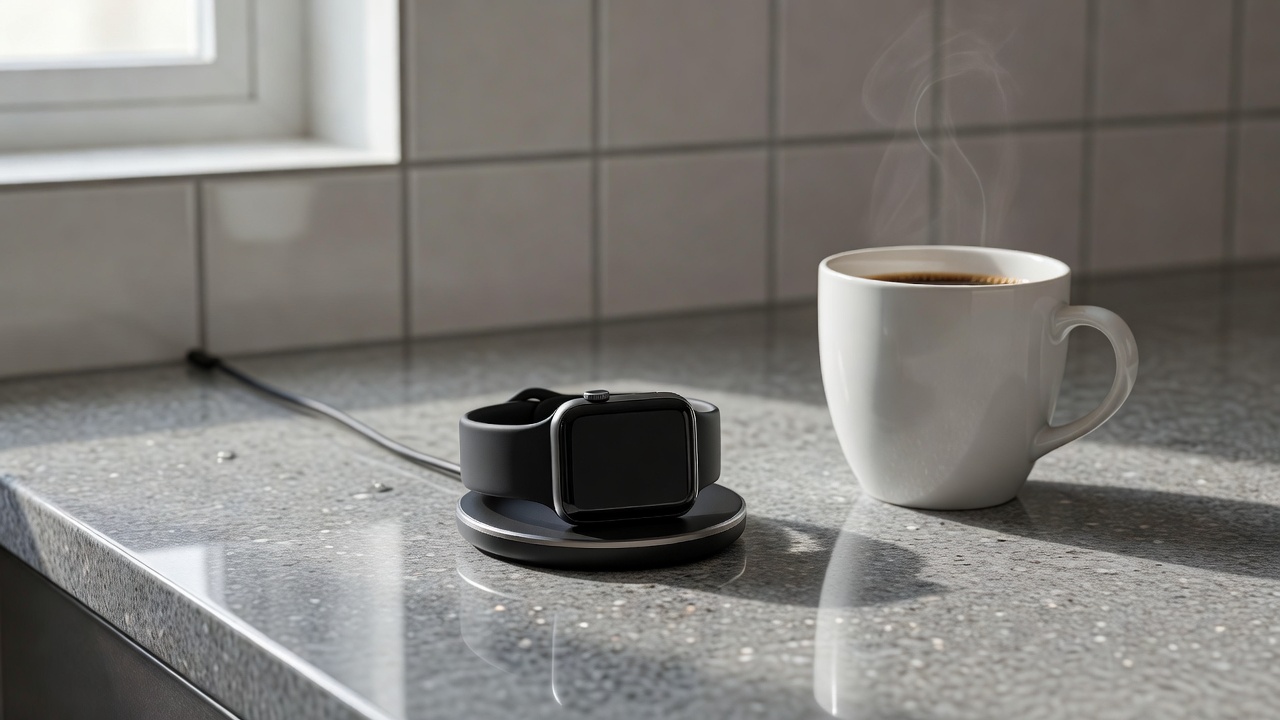
 Habit
Charge with the coffee
The daily-charge watches (Ultra 2 and Pixel Watch 3) worked best when testers topped up during breakfast and a shower. Twenty to thirty minutes usually covered the day, and the watch was back on for sleep tracking.
A flat watch at kilometre 30 of a marathon is a lesson you only need once. Here's how long each watch really lasted in our training, and how to plan charging around your week.
Manufacturer-rated continuous GPS recording, in hours, rounded. Multi-band mode and music reduce these.
Our longest single session was a 9-hour mountain day. Only the Pace 3, Vantage V3 and Forerunner 265 finished it with more than a third of their battery left.
HabitThe daily-charge watches (Ultra 2 and Pixel Watch 3) worked best when testers topped up during breakfast and a shower. Twenty to thirty minutes usually covered the day, and the watch was back on for sleep tracking.
Rated typical daily use. We charged twice a month.
About a week with five GPS runs and AMOLED always-on off.
Rated with continuous heart rate tracking on.
About 24 hours with always-on display.
Smartwatch owners tend to fall into one of two camps. Daily chargers treat the watch like a phone: it goes on a charger at a fixed moment every day, and they never think about it again. Weekly chargers want to forget the cable exists until a low-battery warning appears. Neither is wrong, but choosing a watch that fights your habit is the fastest route to a drawer full of unused gadgets.
If you already charge your phone and earbuds on the kitchen counter every morning, the Apple Watch Ultra 2 or Pixel Watch 3 will slot in easily, and you get the richest apps in return. If you travel, hike or simply forget, the Coros Pace 3 and Forerunner 265 are the safe choices.
Lithium-ion batteries age with heat and with full-to-empty cycles. Keep your watch out of a hot car, avoid letting it sit at zero for days, and don't worry about topping up from 60% to 100%: little and often is perfectly fine. After two or three years of daily use, expect noticeably shorter battery life on any model.
See how battery ties into syncing and phone notifications, or go back to the five watches.
About cookies Some cookies are needed for the site to work. Others help us understand how it is used. You can change your choice later. More about cookies